Or are They Just Making You Fat and Un-healthy?
A look into some of the possible dangers and negative effects on your health of eating too much soy -- Can soy even increase belly fat?
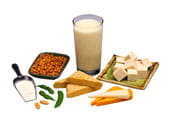
I wanted to include this article because every day I see so many people that don't realize that soy is NOT A HEALTH FOOD! Most people have been deceived and mislead by billions of dollars of advertising that soy protein, soy milk, soybean oil, and processed soy foods are "healthy"... when the truth is that soy has many anti-nutrients and negative factors on the body that we should be concerned about.
In fact, there is evidence that soy foods could possibly even INCREASE YOUR STOMACH FAT if you eat too much soy or too often.
Take a read below, and discover some unsettling facts about soy.
The Dark Side of Soy
Only a few decades ago, unfermented soybean foods were considered unfit to eat - even in Asia. These days, people all over the world have been fooled into thinking that unfermented soy foods like soymilk and soy protein are somehow "health foods". If they only knew the real truth!
The soybean did not serve as a food until the discovery of fermentation techniques, some time during the Chou Dynasty. The first soy foods were fermented products like tempeh, natto, miso and soy sauce.
At a later date, possibly in the 2nd century BC, Chinese scientists discovered that a puree of cooked soybeans could be precipitated with calcium sulfate or magnesium sulfate (plaster of Paris or Epsom salts) to make a smooth, pale curd - tofu or bean curd. The use of fermented and precipitated soy products soon spread to other parts of the Orient, notably Japan and Indonesia.
Growth-depressant compounds are deactivated during the process of fermentation, so once the Chinese discovered how to ferment the soybean, they began to incorporate soy foods into their diets.
The Chinese NEVER ate large amounts of unfermented soy foods or soymilk
The Chinese did not eat unfermented soybeans as they did other legumes such as lentils because the soybean contains large quantities of natural toxins or "antinutrients". First among them are potent enzyme inhibitors that block the action of trypsin and other enzymes vital for protein digestion.
These inhibitors are large, tightly folded proteins that are not completely deactivated during ordinary cooking. They can produce serious gastric distress, reduced protein digestion and chronic deficiencies in amino acid uptake. In test animals, diets high in trypsin inhibitors cause enlargement and pathological conditions of the pancreas, including cancer.
Soybeans also contain haemagglutinin, a clot-promoting substance that causes red blood cells to clump together. Trypsin inhibitors and haemagglutinin are growth inhibitors. Weaned rats fed soy containing these antinutrients fail to grow normally.
Soy also contains goitrogens - substances that depress thyroid function.
Although soy has been known to suppress thyroid function for over 60 years, and although scientists have identified the goitrogenic component of soy as the so-called "beneficial isoflavones", the industry insists that soy depresses thyroid function only in the absence of iodine.
The University of Alabama at Birmingham reports a case in which consumption of a soy protein dietary supplement decreased the absorption of thyroxine. The patient had undergone thyroid surgery and needed to take thyroid hormone. Higher oral doses of thyroid hormone were needed when she consumed soy -- she presumably used iodized salt so iodine intake did not prevent the goitrogenic effects of soy.
A very large percentage of soy is genetically modified and it also has one of the highest percentages ofcontamination by pesticides of any of our foods.
Soybeans are high in phytic acid, present in the bran or hulls of all seeds. Phytic acid is a substance that can block the uptake of essential minerals - calcium, magnesium, copper, iron and especially zinc - in the intestinal tract.
The soybean has one of the highest phytate levels of any grain or legume that has been studied, and the phytates in soy are highly resistant to normal phytate-reducing techniques such as long, slow cooking. Only a long period of fermentation will significantly reduce the phytate content of soybeans.
When precipitated soy products like tofu are consumed with meat, the mineral-blocking effects of the phytates are reduced. The Japanese traditionally eat a small amount of tofu or miso as part of a mineral-rich fish broth, followed by a serving of meat or fish.
People who substitute tofu or bean curd for meat can get severe mineral deficiencies
Vegetarians who consume tofu and bean curd as a substitute for meat and dairy products risk severe mineral deficiencies. The results of calcium, magnesium and iron deficiency are well known; those of zinc are less well known, but equally as bad. Far far more healthy is to eat
pure grass fed meats, cheese, and butter, all high in nutrients and protein rich.
Zinc is called the intelligence mineral because it is needed for optimal development and functioning of the brain and nervous system. It plays a role in protein synthesis and collagen formation; it is involved in the blood-sugar control mechanism and thus protects against diabetes; it is needed for a healthy reproductive system. Grass fed beef is very high in this necessary nutrient, in contrast to soy.
Soy processors have worked hard to get these anti-nutrients out of the finished soy product, particularly soy protein isolate (SPI) which is the key ingredient in most soy foods that imitate meat and dairy products, including baby formulas and some brands of soy milk.
Soy Protein Isolate is an Industrially Produced Food -- Far from Natural or Healthy!
SPI is not something you can make in your own kitchen. Production takes place in industrial factories where a slurry of soy beans is first mixed with an alkaline solution to remove fiber, then precipitated and separated using an acid wash and, finally, neutralized in an alkaline solution.
Acid washing in aluminum tanks leaches high levels of aluminum into the final product. The resultant curds are spray - dried at high temperatures to produce a high-protein powder. A final indignity to the original soybean is high-temperature, high-pressure extrusion processing of soy protein isolate to produce textured vegetable protein (TVP).
Nitrites, which are potent carcinogens, are formed during spray-drying, and a toxin called lysinoalanine is formed during alkaline processing.
In feeding experiments, the use of SPI increased requirements for vitamins E, K, D and B12 and created deficiency symptoms of calcium, magnesium, manganese, molybdenum, copper, iron and zinc. Phytic acid remaining in these soy products greatly inhibits zinc and iron absorption; test animals fed SPI develop enlarged organs, particularly the pancreas and thyroid gland, and increased deposition of fatty acids in the liver.
Yet soy protein isolate and textured vegetable protein (TVP) are used extensively in school lunch programs, commercial baked goods,
diet beverages and
fast food products. They are heavily promoted in third world countries and form the basis of many food give-away programs.
Soy Protein Isolate was once considered a waste product (before they discovered they could make money promoting it as health food!)
Advances in technology make it possible to produce isolated soy protein from what was once considered a waste product - the defatted, high-protein soy chips - and then transform something that looks and smells terrible into products that can be consumed by human beings. Flavorings, preservatives, sweeteners, emulsifiers and synthetic nutrients have turned soy protein isolate, the food processors' ugly duckling, into a new age swan.
"The quickest way to gain product acceptability in the less affluent society," said an industry spokesman, "is to have the product consumed on its own merit in a more affluent society." So soy is now sold to the upscale consumer, not as a cheap, poverty food but as a miracle substance that will prevent heart disease and cancer, whisk away hot flushes, build strong bones and keep us forever young. Or so they want you to believe!
The competition - meat, milk, cheese, butter and eggs - have been duly demonized by the appropriate government bodies. Soy serves as meat and milk for a new generation of virtuous vegetarians.
"People are finally starting to learn that soy is NOT a miracle health food, and more and more expert scientists are issuing warnings about soy."
.jpg)

 antioxidants in the food)

